We rebuilt our own site first
Before we ask a client to trust the process, we run it on ourselves. Here is how we applied our Double Diamond methodology to alemikdigital.com.au, from a generic WordPress template to a purpose-built Hugo static site with scroll-driven animation, a CI/CD pipeline and edge hosting.
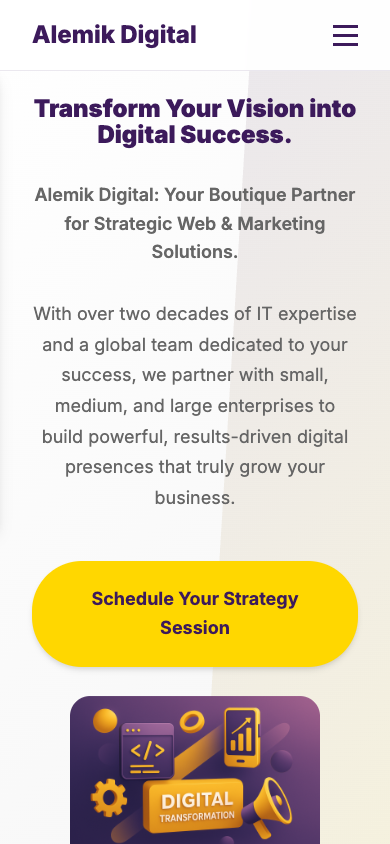
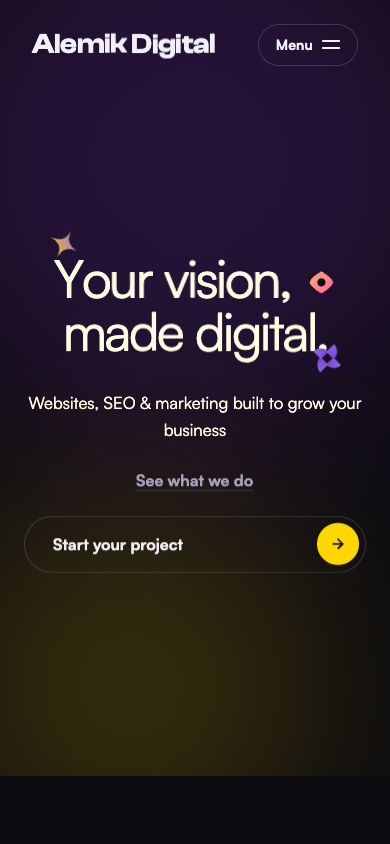
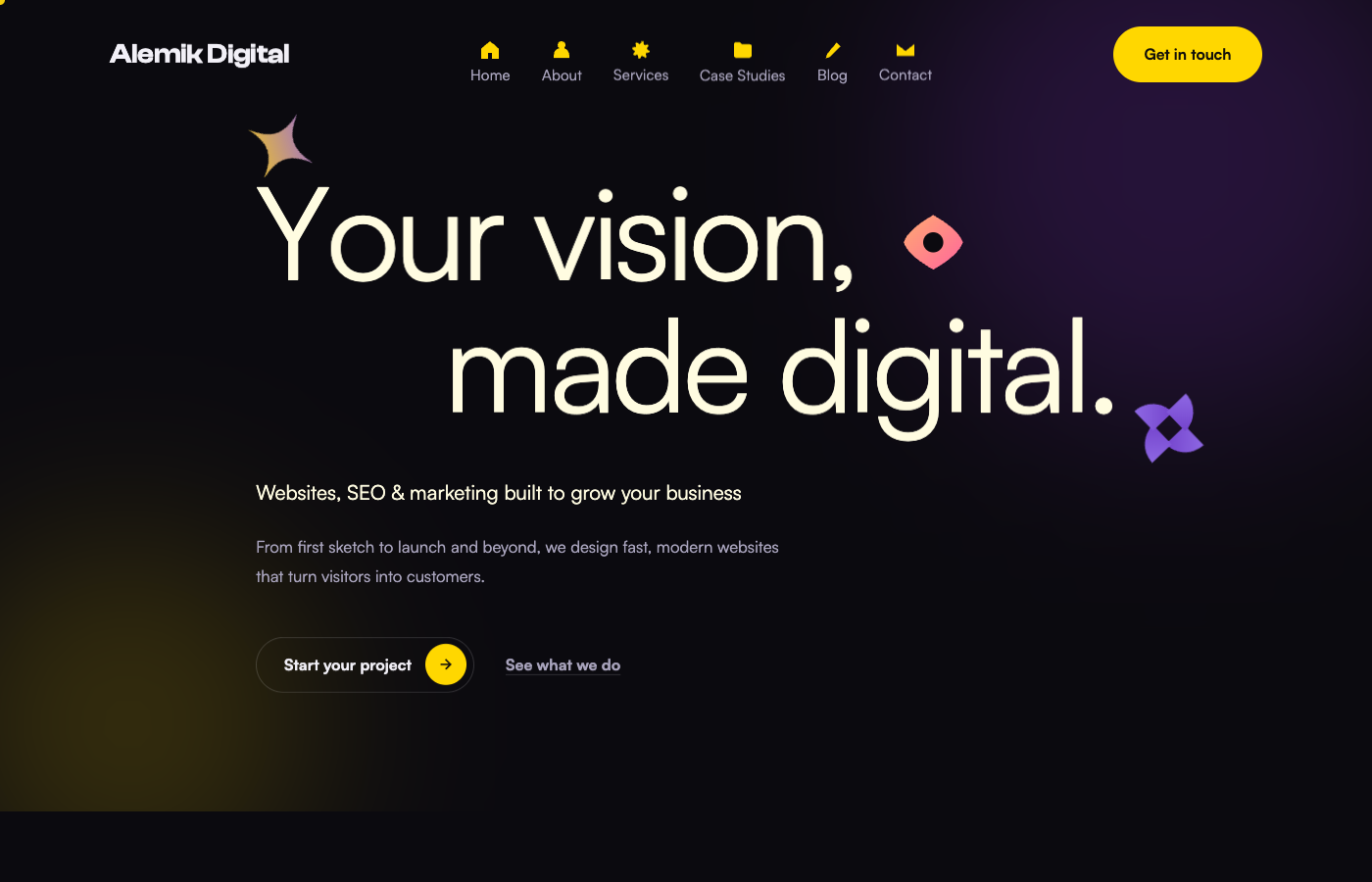
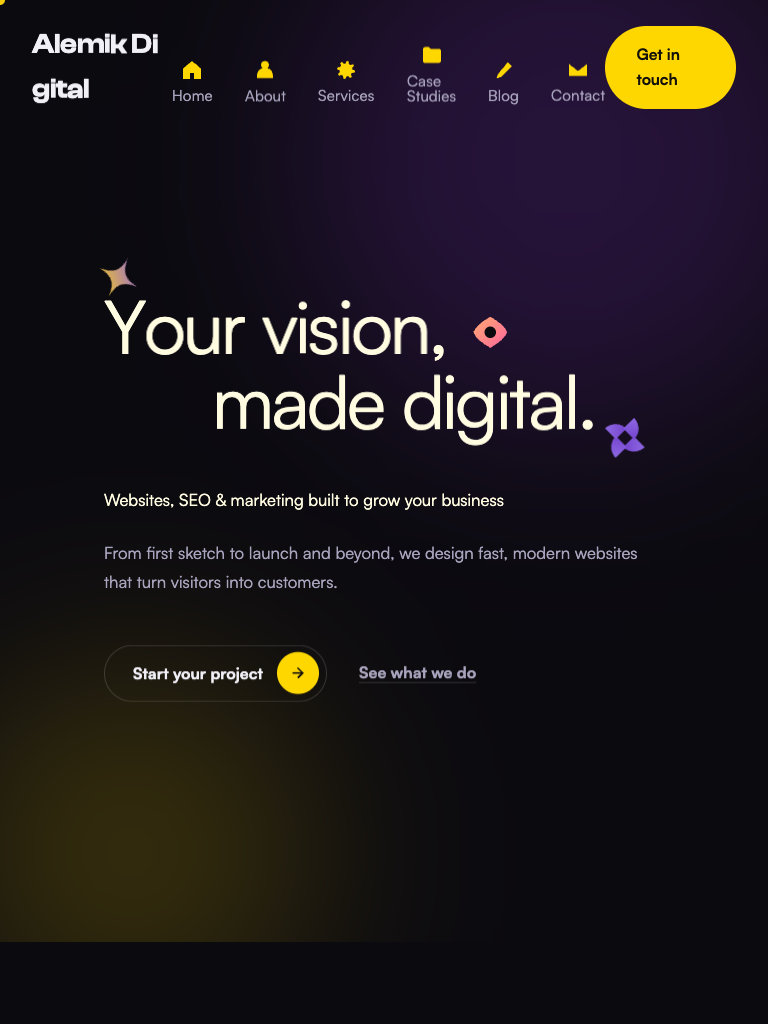
Before and after
WordPress template, generic messaging, stock imagery, manual deploys.


Hugo static site, GSAP animation, Tailwind design tokens, CI/CD pipeline, edge hosting.
What each phase looked like
Same four-stage process we run on every project. Here is what it meant for this one.
We audited the old WordPress site: slow loads, generic copy, stock images, zero SEO structure. Mapped every pain point before opening a code editor.
Wrote 16 specs, each scoped to one deliverable. Cut anything that did not directly serve a small-business visitor looking for help.
Each spec became a commit: lint, build, test, merge. The staging URL updated after every step.
Lighthouse 98, zero vulnerabilities, CI pipeline green. DNS cutover to Cloudflare, Azure SWA edge hosting live.
Built to last
No database, no plugins, nothing to patch. The whole site is flat HTML served from edge nodes.
Performance that speaks
Lighthouse performance
Runtime vulnerabilities
Commit to deploy
Generated from zero themes
Nothing to hack
A static site has no server-side runtime, no database, no login page, no plugin surface area. The attack surface is effectively the CDN edge and DNS. Here is what that buys you.
No database
No SQL injection, no data breach, no credentials to rotate. Content is compiled at build time into flat HTML files.
No server runtime
No PHP, no Node process, no memory exploits. Azure SWA serves pre-built files from edge PoPs with managed TLS.
Audited dependencies
npm audit runs on every commit via pre-push hooks. Zero high-severity vulnerabilities in the dependency tree.
Immutable deploys
Every deploy is a complete snapshot. Roll back to any previous build in seconds. No partial state, no drift.